Featured / Between Sessions
Why the Laptop is Replacing the Professional Studio
How affordable recording tools, home studios, and direct-to-listener platforms made it possible for artists to build entire worlds without booking a professional room.
June 16, 2026 / 5 minute read
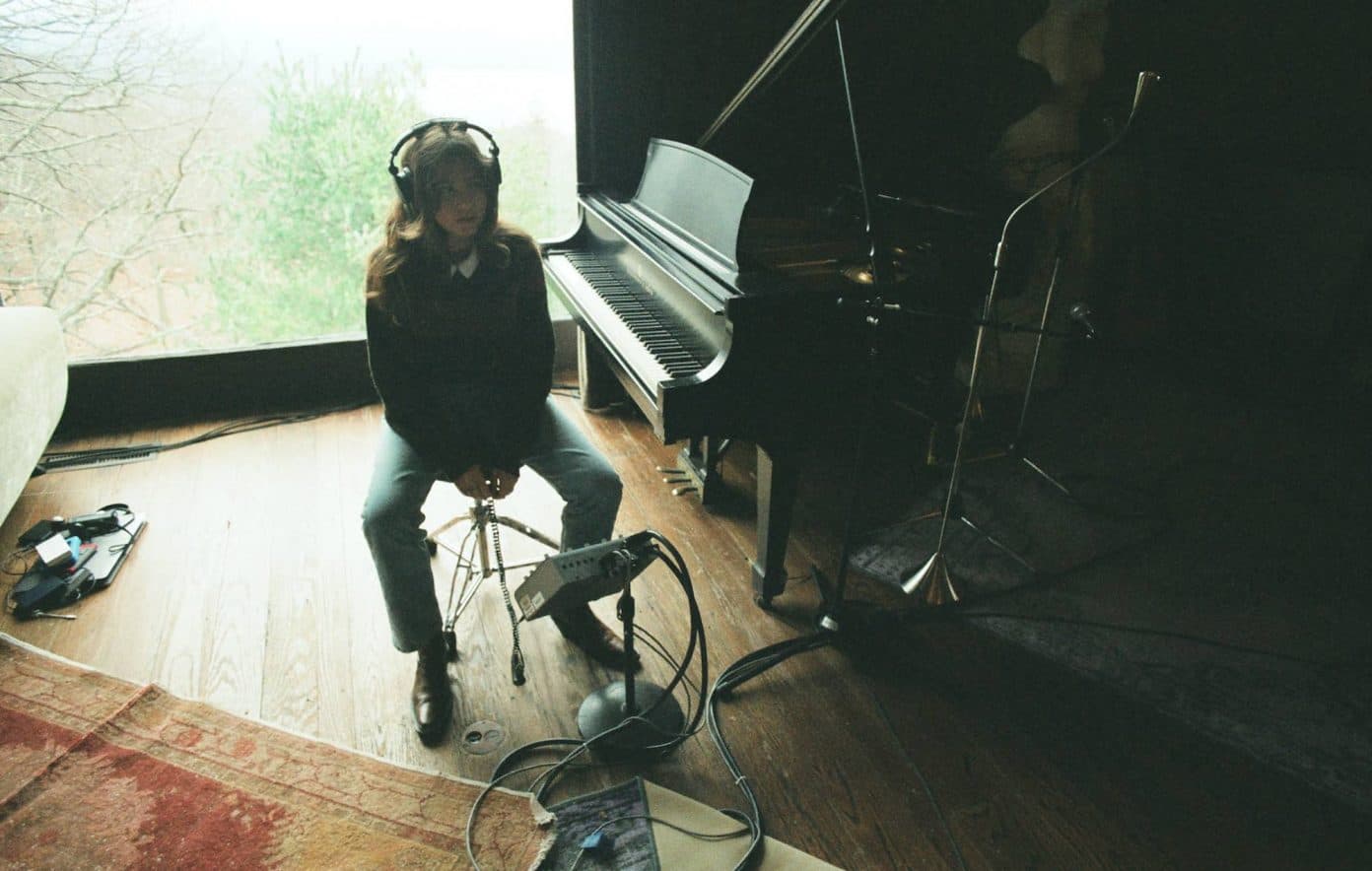
The 2010s saw bedroom pop evolve from a niche internet phenomenon into one of the defining sounds of independent music. Early Clairo and numerous other artists of the era helped usher in a wave of intimate, home-recorded music that felt both deeply personal and remarkably accessible. While the genre's sonic identity often varied from artist to artist, its reputation became tied to airy keyboards, close-mic vocals, and minimalist drum programming. Now that bedroom pop has firmly established its place within the modern music landscape, it's worth examining why the movement gained such extraordinary momentum in the first place. The answer is hidden in the genre's name. Bedroom pop was never defined solely by its sound; it was defined by its method of creation.
For decades, recording music was an expensive process. Artists either needed access to professional studios or had to spend thousands of dollars building their own recording setups. Studio time itself often cost hundreds of dollars per day, and every step of the process - from recording to mixing to mastering - typically involved specialized professionals. For many aspiring musicians, the greatest obstacle wasn't talent or creativity, it was simply access.
As computers became more powerful and digital audio workstations became increasingly accessible, the barriers that once separated hobbyists from professional musicians began to collapse. Programs like GarageBand, Audacity, Logic Pro, FL Studio, and Ableton Live allowed artists to create music from home for a fraction of what a traditional studio session would cost. A laptop suddenly became a recording console, a drum machine, a synthesizer collection, and a mixing desk all at once. More importantly, these tools didn't just become cheaper, they became easier to use.
A teenager with no formal training could open a DAW and begin experimenting immediately. Entire songs could be constructed using virtual instruments, software effects, and a pair of headphones, and arrangements that would take years to learn from square one could be conceived in an hour. While professional studios still offered advantages, the gap between what could be achieved at home and what could be achieved in a commercial environment grew smaller every year. Bedroom pop emerged directly from this technological shift.
Its defining characteristics were often less a stylistic choice and more a reflection of circumstance. Limited equipment encouraged creative problem solving. Small recording spaces created intimate vocal performances. Simple drum programming replaced live drum kits that many artists couldn't record. What might have originally been viewed as constraints eventually became part of the genre's identity.
Ironically, many of the qualities critics dismissed became the very traits listeners connected with most. The polished perfection that had dominated mainstream music for decades began to feel distant and manufactured to some audiences. Bedroom pop offered something different. Songs felt personal. Imperfections remained in recordings. Vocals weren't always perfectly tuned. Background noise occasionally slipped through. Rather than making the music feel amateurish, these details often made it feel human.
That authenticity became one of the genre's greatest strengths. The audience wasn't imagining some massive recording complex in Los Angeles or New York. They were imagining a songwriter sitting alone in a bedroom trying to turn an idea into something real. The process felt relatable because, for the first time, many listeners could realistically imagine doing it themselves.
Few artists illustrate this shift better than Steve Lacy, who famously produced much of his early work using GarageBand on an iPhone and recorded vocals through a pair of wired earbuds. Stories like his challenged long-standing assumptions about what professional music production was supposed to look like. They suggested that creativity, taste, and songwriting ability could matter just as much as expensive gear.
And Steve Lacy wasn't an exception. Throughout the last decade, countless artists built audiences from makeshift home studios. Some used closets as vocal booths. Others recorded on laptops balanced on bedroom desks between school assignments and part-time jobs. The commonality was now technology that was accessible to the average household.
Recording music at home would have meant little if artists still needed record labels to reach listeners. Platforms like SoundCloud, Bandcamp, YouTube, Spotify, and Apple Music gave independent musicians direct access to audiences around the world. The same laptop used to create a song could now be used to release it.
For the first time in music history, a single individual could write, record, mix, market, distribute, and monetize their work without relying on the traditional gatekeepers of the industry. This democratization inevitably led to concerns about oversaturation. If everyone could make music, everyone would make music. Millions of songs began appearing online each year, making discovery more difficult than ever before. Critics argued that lowering the barriers to entry would also lower the average quality of music being released.
There is some truth to that argument, but it's also worth acknowledging what was gained in the process. Lower barriers didn't just create more music - they created more opportunities. Artists who may never have received a label deal suddenly had a platform. Niche genres found dedicated audiences. Creative voices that would have previously gone unheard were finally able to participate in the conversation.
In many ways, bedroom pop represented a broader cultural shift within music itself. Success was no longer reserved exclusively for artists with industry connections or access to professional studios. The tools of creation had become widely available, and the industry was forced to adapt.
Today, professional studios still play an important role. They offer expertise, acoustic treatment, specialized equipment, and collaborative environments that home studios often cannot replicate. But their monopoly on music creation has disappeared. The modern musician can choose whether they need a professional studio rather than being forced to rely on one.
That's why the laptop isn't necessarily replacing the professional studio - it is replacing the need for one.
Bedroom pop's greatest contribution wasn't its washed-out guitars or hushed vocals. It was proving that meaningful music could emerge from virtually anywhere. The movement demonstrated that great songs aren't created by expensive rooms or vintage equipment. They're created by people with ideas worth sharing.
And in an era where a laptop can fit inside a backpack, those people have never had more power than they do now.